

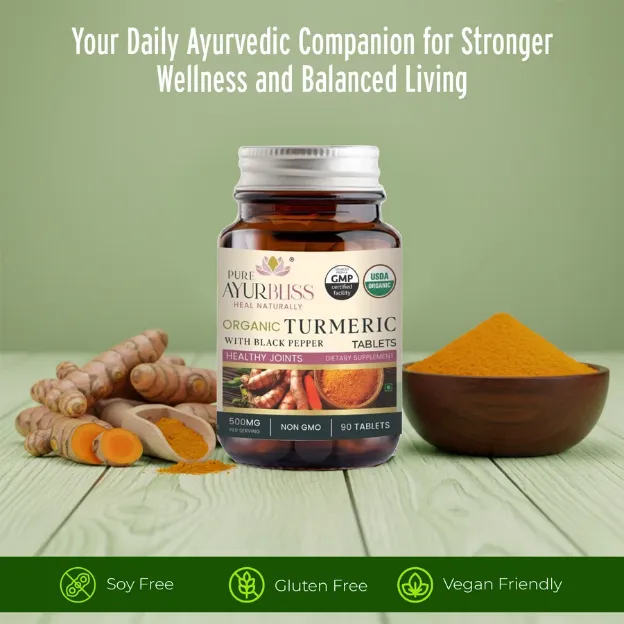
Open any wellness aisle, and you find a dozen bottles of organic turmeric capsules, each with bold claims on the front. One promises joint comfort. Another promises antioxidant support. A third promises both at half the price. The front label tells you little.
Better decisions come from asking how strong the research is, how well the product is made, and whether the dose matches what studies used. This guide gives you a clear method to answer those three questions before you buy.
What Evidence Means for a Supplement
Not all research carries equal weight. Lab studies test a compound in a dish. Animal studies test it in mice. Human trials test it in people. Randomized controlled trials compare a supplement against a placebo. Systematic reviews pool many trials. Each step gives you stronger proof. Many labels cite the weakest steps. A headline like “curcumin kills cancer cells” usually comes from a petri dish.
Your digestive system, liver, and bloodstream change what reaches your tissues, so a dish result does not predict a capsule result. Ask four questions. Did the study use humans? Did it use a placebo and random assignment? Did it use the same form and dose as this product? Who funded it? Strong answers to all four count more than any marketing line.
What the FDA Does and Does Not Do
In the United States, the FDA does not approve dietary supplements before they reach shelves. Under the Dietary Supplement Health and Education Act of 1994, manufacturers hold responsibility for safety and accurate labeling. The FDA steps in after a problem appears.
Labels describe how an ingredient supports body structure or function. The law bars labels from claiming to treat, cure, or prevent disease, and every label carries a disclaimer saying the FDA has not evaluated these statements. This system puts the burden on you and on the brand to show quality. Independent testing fills the gap.
Read the Label Like an Analyst
Start with the active compounds. Turmeric root contains roughly 3 percent curcuminoids by weight. A capsule listing 1,000 mg of turmeric powder delivers about 30 mg of curcuminoids. A standardized extract with 95 percent curcuminoids delivers far more per capsule. Compare curcuminoid content, not the large number on the front. Check for an absorption aid. Curcumin absorbs poorly on its own.
A widely cited 1998 study found piperine, the compound in black pepper, raised curcumin absorption in humans by 2,000 percent. Many quality formulas pair the two for this reason. Review inactive ingredients too. Look for fillers, artificial colors, and preservatives. Shorter lists make comparison easier. Finally, match serving size to trial doses. Many human trials used 500 to 2,000 mg of curcumin extract daily, which exceeds the amount in a typical curry.
Look for Proof of Quality
The USDA Organic seal tells you how the herb grew. The seal confirms farming without synthetic pesticides and fertilizers. The seal does not confirm potency. Pair the seal with third-party testing for identity, strength, and contaminants. Reliable brands publish a certificate of analysis for each batch, and some carry verification from groups such as USP, NSF, or ConsumerLab.
Contaminants matter with turmeric in particular. Researchers have documented lead chromate added to turmeric in some spice markets to deepen its color. Heavy metal testing screens for this risk. If a brand offers no batch reports, ask for them. A transparent company shares them.
Turmeric Tablet Uses: What Research Supports
Ayurveda has used turmeric, called haridra, in food and daily routines for centuries. Modern research tests several turmeric tablet uses. Joint comfort has the most human data. Several trials in adults with knee osteoarthritis reported less pain with curcumin extracts than with placebo, though study size and quality vary. Researchers also study turmeric for antioxidant activity and digestive comfort. Results here come mostly from smaller trials.
Stay honest about limits. Turmeric products do not replace medical care or prescribed treatment. Expect gradual results, since many trials ran 8 to 12 weeks. Track your own response with a weekly note on pain, stiffness, or digestion, and review the notes with your healthcare provider.
Safety Comes First
Natural does not mean risk-free. Health agencies have received rare reports of liver injury linked to turmeric supplements, often involving high-dose or high-absorption formulas. Turmeric supplements might interact with blood thinners and some diabetes medicines, and people with gallbladder problems need advice before use. Tell your doctor or pharmacist about every supplement you take. Bring the bottle so they review the ingredient list. Stop use and seek care if you notice yellowing skin, dark urine, or persistent stomach pain.
Your Quick Checklist
Confirm human trial support. Compare curcuminoid content. Look for piperine or another absorption aid. Verify the USDA Organic seal. Request a batch certificate of analysis. Check the dose against studies. Talk with your doctor before you start.
Conclusion
Better choices come from evidence, quality, and safety, in that order. Judge claims by the strength of the research, read labels for active compounds and dose, and expect batch testing from every brand. Natural supplements deliver value when you pair realistic expectations with professional guidance. Start with one product, track your results for eight to twelve weeks, and adjust with your healthcare provider.
Pure AyurBliss is a US-based brand offering Ayurvedic herbal supplements in tablet and powder form, including turmeric tablets. The company sources certified organic botanicals, tests them through third parties, and manufactures in the USA. Shoppers who want guidance in selecting a product also book a one-on-one consultation through the brand.
